Our Work
Red Dirt Dectectives - Mapping Wild Bilbies
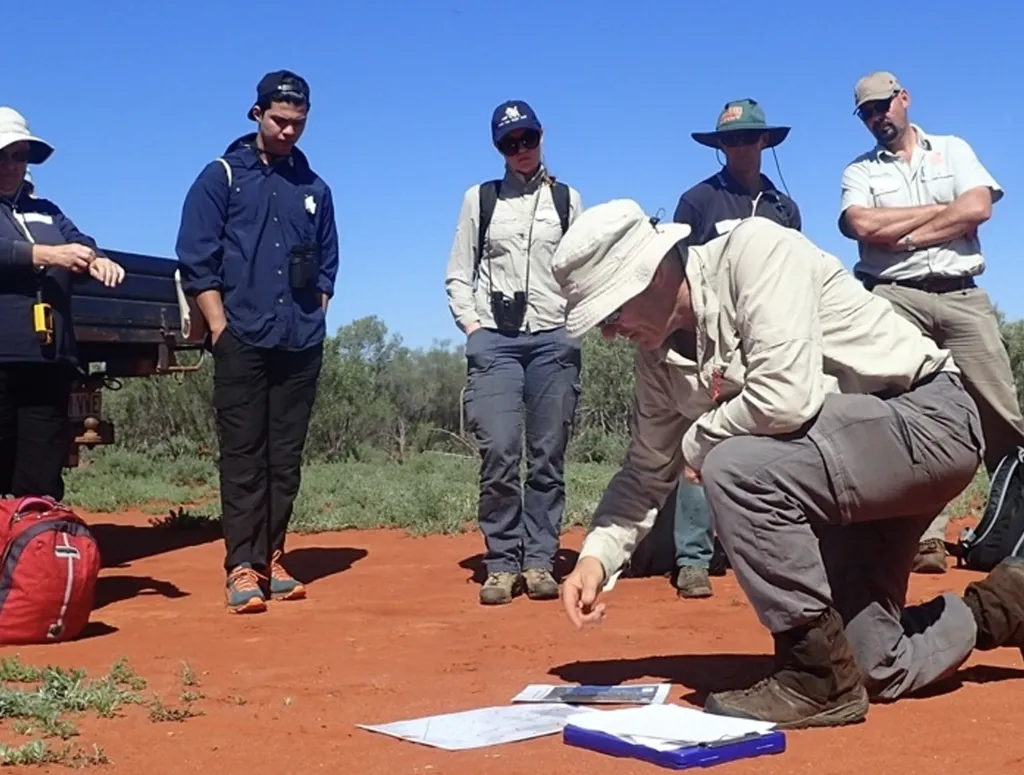
Every five years, our small but mighty team heads into the remote country of far western Queensland to map wild bilby populations. This important survey helps us understand where bilbies are living and how best to protect them, because you cannot protect what you cannot find.
The next survey is due in 2026 and will take place across the same area surveyed in 2021. Thanks to the wonderful generosity of our donors, this project can now go ahead. In the coming weeks, our Red Dirt Detectives, supported by a pilot, plane, and trained spotters, will be back in the field searching for burrows, tracks, and scat across tough desert country.
Outside the fence
Bilby release loading…
Poop,
Scat,
DNA!
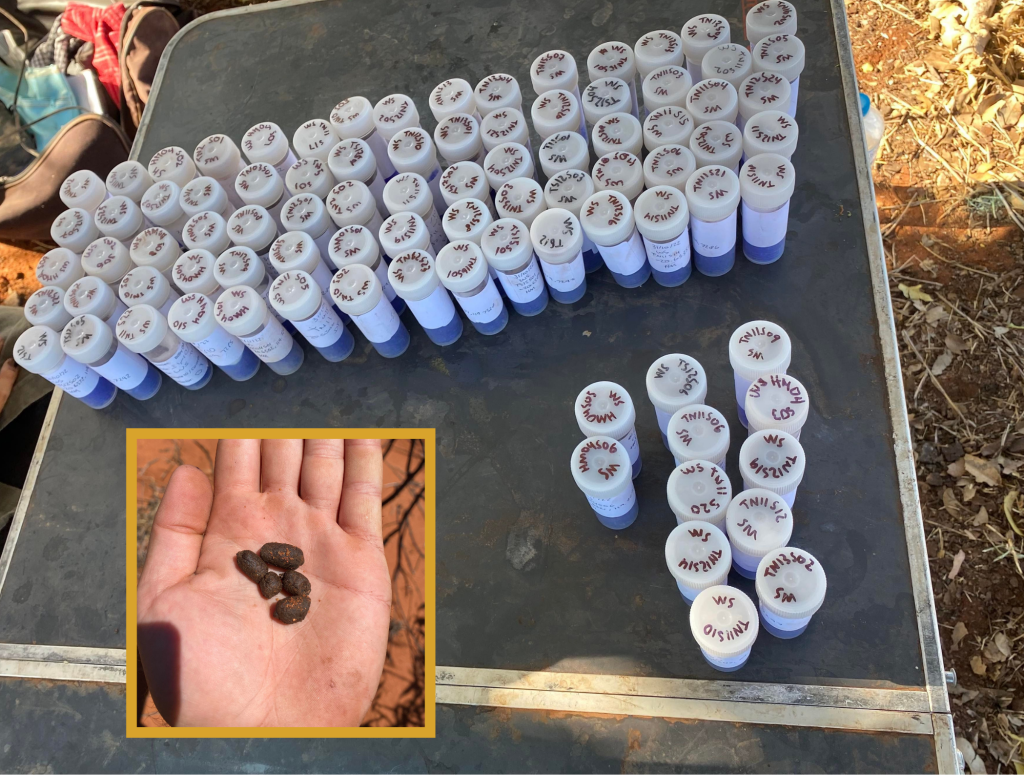
At the end of 2023, you so graciously helped us raise funds for a critically important research project: A National Bilby Genome Project.
The bilby was genetically profiled for the first time in 2021, which gave us the genome. That is the entire set of genetic instructions for making and growing a bilby. The bilby genome is incredibly complex – with 3.7 billion pieces of genetic code.
We used to have to invasively take a sample of tissue from their ears to profile their DNA; which is mighty hard considering they are nocturnal and spend most of their days deep underground. So we had trouble finding and capturing them.
However recent technological advances mean we can now extract DNA from bilby droppings/poop/scat. This is much easier to find! We will be collecting scat samples from wild bilbies as well as those in managed sanctuaries.
This is a national project, and we are working together with:
- The Greater Bilby National Team
- The University of Sydney
- Deadly Science
- Taronga Conservation Society of Australia
- The Greater Bilby Management Subcommittee
- The Greater Bilby scientific working group
- Rachel Paltridge, Indigenous Desert Alliance
- Department of Biodiversity, Conservation and Attractions (DBCA)
Lights, Camera,
take ACTION!
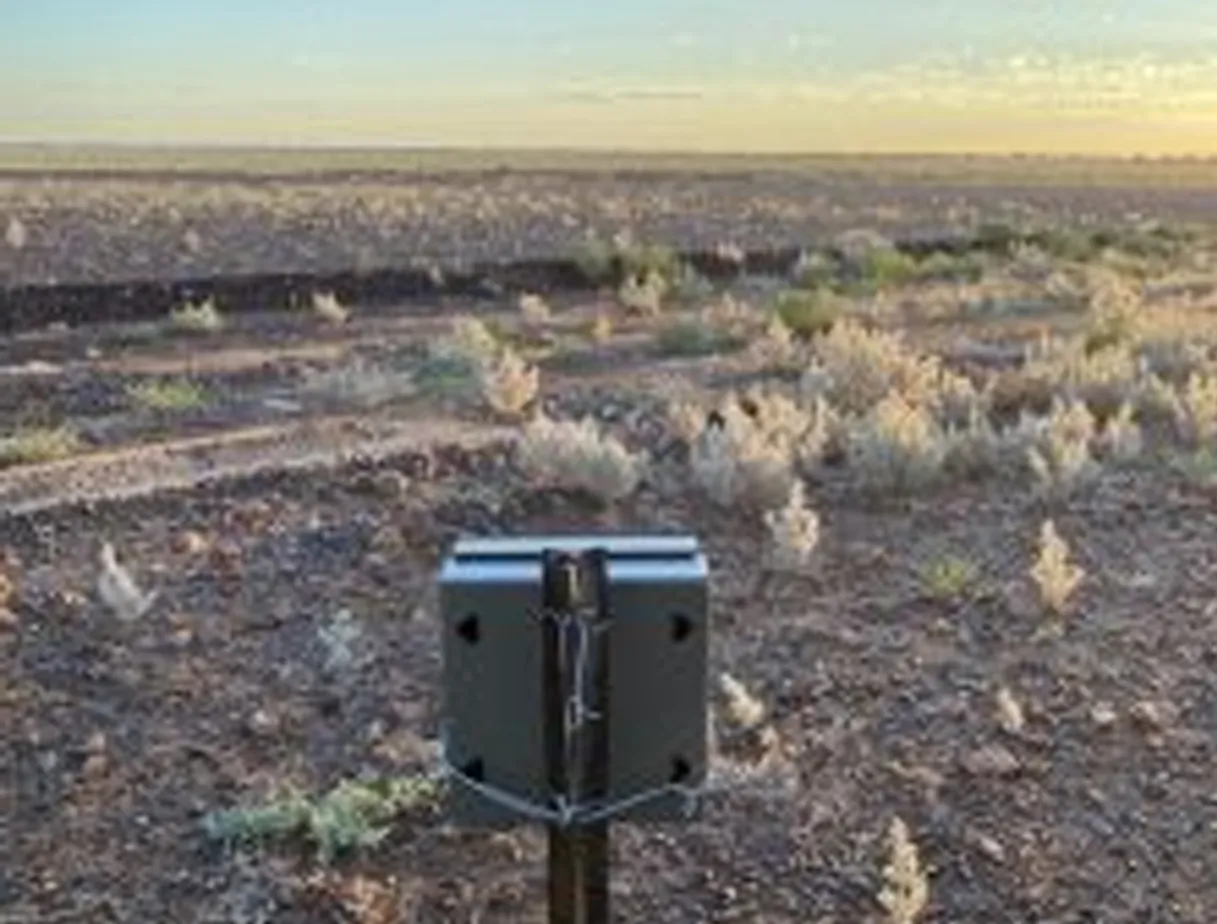
In 2022, your generosity helped purchase and install 100 activity monitoring cameras on private pastoral estates between Boulia and Birdsville. That project has enabled us to see a clearer picture of bilby and bilby predator occupancy across 1,200km². The project was an essential step forward in our mission to secure the long-term safety of the Greater Bilby.
The cameras were installed in June 2023, and crucial data is now being collected. Read the update from Dr Cass HERE.
We have gathered invaluable information from those cameras and we have seen a glimpse of which locations wild bilbies are persisting in, which locations wild feral cats, dogs, foxes, and cattle are co-inhabiting, and what effect they have on each other.
The data from the cameras helps us understand where wild bilbies have been able to persist in the wild and–importantly–where they haven’t and why.
‘Reconyx HP2X HyperFire 2 Professional Covert Camera’ is perfect for this critical job:
- With a 0.2s trigger speed, it won’t miss anything
- Detection range is 30 metres – over half of an Olympic pool (not that you’ll find any of those in far-west Queensland!)
- Infrared night vision range –essential for the nocturnal bilby – is 45 metres
- Operates in temperatures-40 to 60 °C – perfect for the harsh desert extremes
In 2024, you helped us purchase more of these cameras to expand our monitoring locations to around 2,500 kilometres squared. This has allowed us to gather even more data to help with the survival of The Greater Bilby.
Manage the Metapopulation
Now that the bilby genome has been mapped, it is being used to manage the bilby metapopulation in zoos, fenced sanctuaries and islands.
“By selecting individuals for translocation and release we maximise their genetic diversity, thus improving the population’s ability to adapt to a changing world.” Professor Carolyn Hogg.
The Queensland government has gifted the Northern Territory government with 35 endangered bilbies bred at Currawinya National Park by Save the Bilby Fund, south of Cunnamulla. It’s one of the largest-ever translocations of bilbies – Australia’s last surviving arid bandicoot species. Their new home will be Newhaven Reserve, west of Alice Springs – the world’s largest fenced area for threatened species. Over two days the bilbies are trapped in Currawinya, checked by vets and then flown to Hungerford (population 11!) to begin their safe new lives in the Northern Territory.
Story by Danielle Lancaster and Craig Fitzsimmons. ABC Australia
Bilby release & tracking
Each year, we carry out a bilby census inside our predator exclusion fence to monitor the population and track the progress of our recovery program. In 2024, the census took place over five nights, with teams working from late afternoon through to the early hours of the morning. Staff, volunteers and veterinary team members all played an important role, helping to check and reset traps, handle bilbies safely, scan microchips, and record each animal’s weight and measurements.
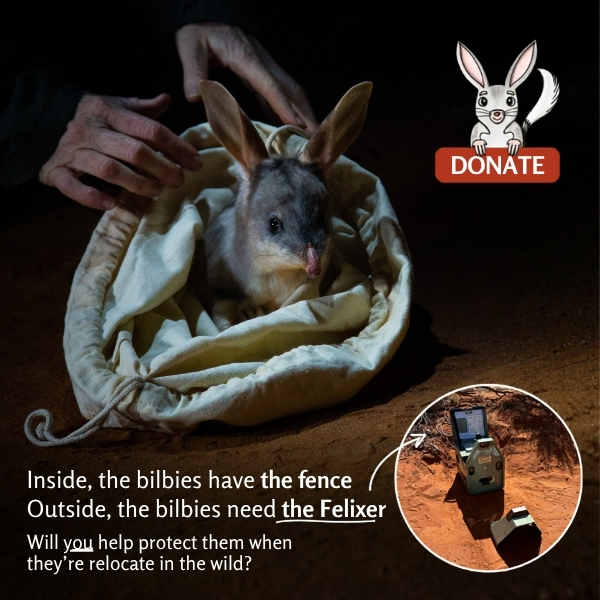
Our 2025 Census showed that more than 700 bilbies are now thriving behind the fence. Together with our breeding facility, this success allows us to build the captive population further, with bilbies being transported from wildlife parks around Australia to Currawinya for release within the predator-proof fence. Because the bilbies are doing so well in this protected environment, we have now reached the exciting stage where translocation outside the fence can begin, with this important next step happening in July 2026.
To save the bilby we need to maintain essential genetic diversity and continue to build up their numbers in safe and secure locations. This will provide insurance against the possibility of extinction in the wild and enable the re-introduction of bilbies into specially managed areas.
Without large numbers of safe and secure populations of bilbies, we are destined to lose the battle to save them.
The good news is that bilbies are a fast breeding animal and are superbly adapted to survival in our harsh outback. So their odds of recovery are exceedingly good, if only we give them that chance.
From the generous donations of the previous appeals, Save the Bilby Fund will be able to further upgrade our bilby captive breeding facilities, build new crèche-ing pens, and provide an environment that trains the bilbies for release.
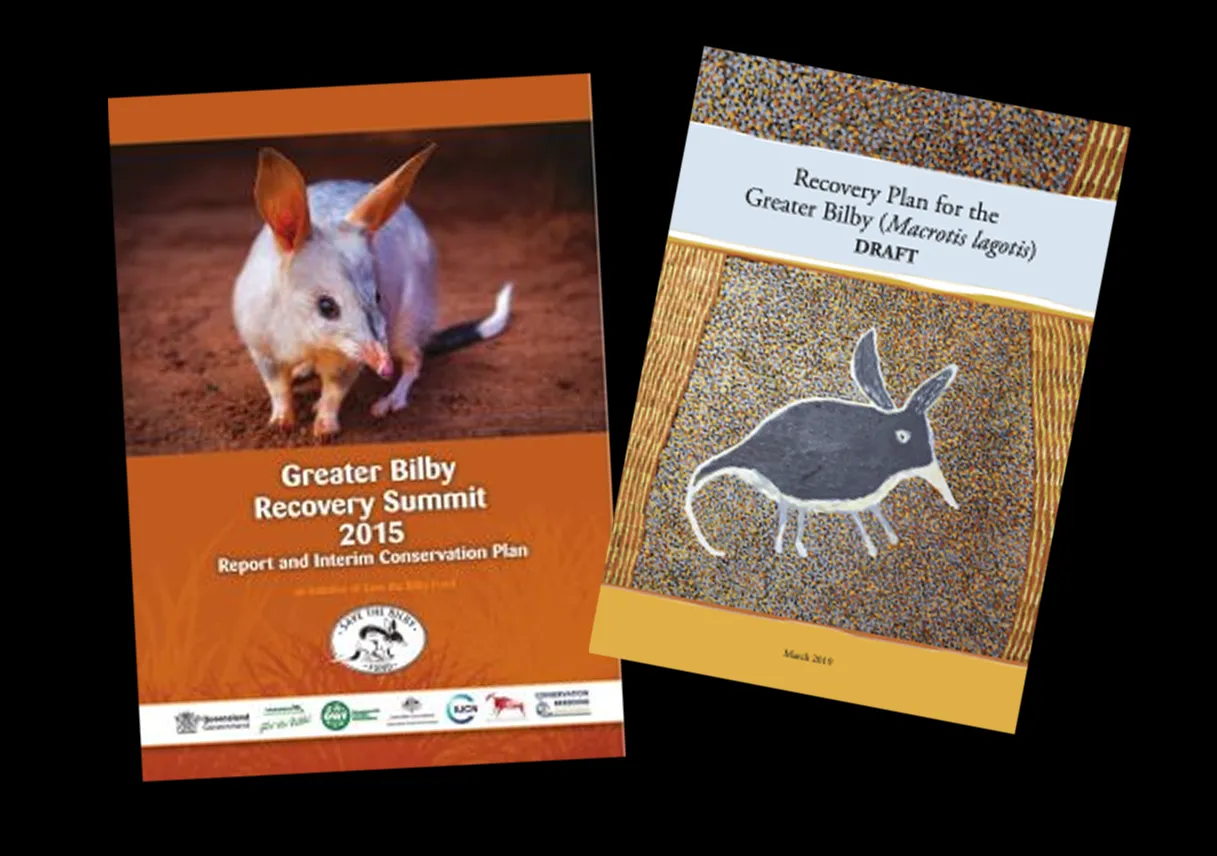
In March 2015, Save the Bilby Fund initiated the Greater Bilby Recovery Summit, bringing together 39 experts representing 29 stakeholder groups involved in bilby conservation. The Summit helped shape national recovery efforts, and Save the Bilby Fund continues to work with stakeholders across Australia, including Indigenous ranger groups, leading conservation organisations such as Wildlife Conservation Society and Bush Heritage, and wildlife parks that support the breeding program.
Save the Bilby Fund is committed to delivering on the Greater Bilby Recovery Summit 2015 Report and Interim Conservation Plan and is working with all stakeholders to develop a new National Recovery Plan for the Greater Bilby based on the outcomes of the Summit.
A three-month public consultation period for the DRAFT Recovery Plan for the Greater Bilby closed on 12 July 2019.
Ten years after the original Summit, we were proud to host the 2025 Greater Bilby Recovery Summit, sponsored by Dreamworld. Although the event was sadly cut short by Cyclone Alfred, it reflected the strength of the partnerships supporting bilby recovery. In 2026, we hosted the Greater Bilby National Recovery Team and Specialist Subcommittee Meeting and Workshop in collaboration with ZAA, IUCN SSC Conservation Planning, Indigenous Desert Alliance, and the Australian Government to finalise the work started in 2025.